
Table of Contents
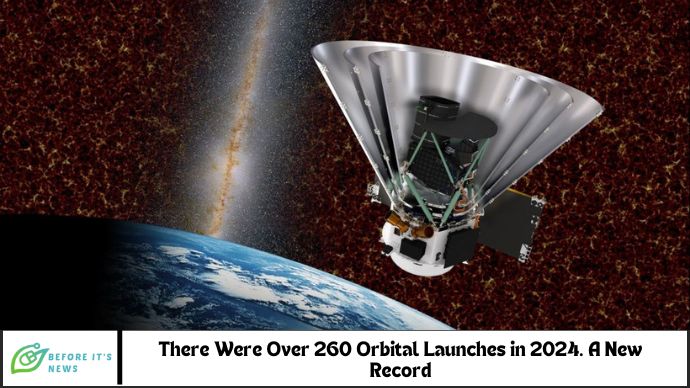
There Were Over 260 Orbital Launches in 2024. A New Record Rocket launches used to be rare, awe-inspiring events that captured global attention, especially in the 50s and 60s. A single launch could make headlines around the world. Fast forward to 2024, and rocket launches have become so frequent they almost seem routine. Last year alone, the space industry achieved a record-breaking 263 orbital launches. The United States led the charge with 158 launches, followed by China with 68. Other regions like Europe, Russia, and Japan contributed as well. This marks a sharp increase from 2023, which saw just 224 launches, and is a giant leap from 2022’s 168 launches. It’s hard to believe, but before 2020, the launch record was a mere 141 in 1967—highlighting just how far space technology has come in less than a century.
It might be surprising to many, but the origins of rocket flight stretch back centuries. The first examples of rocket-like technology can be traced to 9th century China, where gunpowder-propelled bamboo tubes were used as weapons. These primitive rockets were the first instances of human-made flight beyond the Earth’s surface.
However, modern rocketry truly began to take shape in the early 20th century, largely due to the contributions of engineers and scientists like Konstantin Tsiolkovsky and Robert Goddard. Tsiolkovsky’s theoretical work on rocket propulsion laid the foundation for space travel, while Goddard made history by launching the first liquid-fueled rocket in 1926 in the United States
Rocketry’s Acceleration Through War and Cold War Rivalry
During World War II, rocket technology advanced rapidly, albeit largely driven by military needs rather than scientific exploration. Germany’s V-2 rocket marked the first long-range ballistic missile, signaling the beginning of serious rocket innovation for warfare. The Cold War between the United States and the Soviet Union further fueled this race, spurring significant advancements in rocket technology.
This period of intense competition eventually led to major milestones, including the launch of Sputnik 1 by the Soviet Union in 1957, marking humanity’s first step into the space age. The Apollo 11 mission followed in 1969, landing the first humans on the Moon and proving that rocket flight could take us beyond Earth.
Since then, the pace of rocket launches has only accelerated, with missions exploring distant planets, establishing space stations, and deepening our understanding of the universe. The future of rocket flight seems not just alive, but thriving.
Why 2024 Was a Record-Breaking Year for Orbital Launches
The space industry has been growing at an unprecedented rate, with private companies, national space agencies, and international collaborations propelling the sector forward. But what contributed to 2024 being such a landmark year for orbital launches?
- Increased Private Sector Involvement: Companies like SpaceX, Blue Origin, Rocket Lab, and Relativity Space have drastically increased the frequency of their launches. SpaceX, in particular, has led the charge, with its Starlink satellite constellation and regular Falcon 9 launches making up a significant portion of the total.
- Satellite Deployment and Broadband Expansion: A major driver behind the increase in launches is the ongoing push for global internet connectivity via satellite constellations. Projects like Starlink and OneWeb are aiming to deploy thousands of small satellites in low Earth orbit (LEO), providing internet access to underserved regions worldwide.
- Growing Demand for Earth Observation: Satellites designed for climate monitoring, disaster management, and global security are also contributing to the surge. More governments and private companies are launching satellites to monitor everything from weather patterns to defense-related activities.
- Miniaturization of Satellites: The development of small satellites or smallsats, weighing only a few kilograms, has made it more cost-effective to launch multiple payloads on a single rocket. This has opened the door for more frequent and affordable launches.
- International Collaborations: Space agencies from countries like China, India, and the European Union have continued to contribute to the growing number of orbital missions. Their consistent launch schedules have bolstered global space activities.
Key Players Driving Orbital Launches in 2024
While many players are involved in these record-setting launches, a few stand out for their sheer contribution:
SpaceX
- Total Launches: SpaceX completed over 70 launches in 2024, with a major focus on expanding its Starlink constellation and providing cargo delivery to the International Space Station (ISS).
- Innovation: SpaceX continues to innovate with reusable rockets, drastically reducing the cost per launch. Their Falcon 9 rockets are central to the company’s success.
Rocket Lab
- Focused on Small Satellites: With Electron rockets, Rocket Lab is making significant strides in the smallsat launch market. Their efficient and affordable launches cater to growing demand from both private companies and governments.
Blue Origin
- Space Tourism and Beyond: While Blue Origin is more focused on suborbital flights and space tourism, it is also positioning itself for more ambitious orbital missions. Their New Glenn rocket is expected to play a role in future large-scale orbital launches.
China and India
- Expanding Capabilities: The China National Space Administration (CNSA) and the Indian Space Research Organisation (ISRO) have both significantly increased their orbital launches, particularly for navigation satellites, communications, and scientific missions.
The Impact of Record Orbital Launches on Global Connectivity
The increasing number of orbital launches is having a direct impact on global connectivity. As space-based internet projects like Starlink continue to deploy thousands of satellites, people in remote and underserved areas are gaining access to reliable internet services for the first time.
Improved Communication Infrastructure
- Starlink’s Global Network: In 2024, Starlink’s satellite constellation expanded its service offerings, providing broadband internet to millions globally. This development is crucial for regions where terrestrial broadband is not feasible due to geography or infrastructure limitations.
- OneWeb: Similarly, OneWeb’s satellites are filling in the gaps for remote areas, offering low-latency internet that could revolutionize global communications and remote education.
The Role of Small Satellites in Monitoring Earth
- Small satellites are helping to create a global network of sensors for monitoring the Earth. From observing climate change to improving disaster prediction, the sheer volume of launches allows for better and more timely data collection, which is vital for addressing global challenges like climate change and disaster management.
The Future of Orbital Launches
Looking ahead, the space industry is poised for even greater achievements. As of 2024, we’ve witnessed record-breaking numbers, but what comes next?
Lunar and Mars Missions: With ambitious missions to the Moon and Mars in the pipeline, the frequency of orbital launches is likely to increase even further. NASA’s Artemis program and private companies like SpaceX’s Starship are planning to send humans back to the Moon and beyond, which will require frequent and powerful launches.
Space Tourism: The rise of space tourism by companies like Blue Origin and Virgin Galactic is expected to bring more attention—and more frequent launches—to the space industry.
Space Debris Management: As the number of satellites in orbit increases, so too does the risk of space debris. In the coming years, we may see new technologies focused on debris removal and satellite re-entry to ensure the long-term sustainability of orbital activities.
Interplanetary Travel: The dream of interplanetary travel is becoming more plausible. Companies like SpaceX are pushing forward with technology that could facilitate human travel to Mars and other planets, making space exploration a permanent part of human activity.
Conclusion
The record 260+ orbital launches in 2024 represent more than just a number; they mark the beginning of a new era in space exploration, technology innovation, and global connectivity. As private companies and government space agencies ramp up their missions, the landscape of space activity will continue to evolve. With enhanced satellite systems, new exploration missions, and expanding commercial opportunities, we are entering an age where space will play an increasingly significant role in shaping our future.
FAQ
1. How many orbital launches occurred in 2024?
In 2024, there were over 260 orbital launches, setting a new record for space activity.
2. Why is 2024 significant for orbital launches?
The surge in launches is due to increased private sector involvement, satellite constellations like Starlink, and growing demand for Earth observation.
3. Who are the key players in 2024’s space launches?
Major contributors include SpaceX, Rocket Lab, Blue Origin, and national space agencies such as ISRO and CNSA.
4. What role do small satellites play in the surge?
The miniaturization of satellites has made launches more affordable and frequent, especially for missions involving communications and Earth observation.
5. How do orbital launches affect global connectivity?
Orbital launches, particularly for satellite internet, are expanding global broadband access, especially in underserved areas.
6. What’s next for orbital launches in the future?
We can expect more launches focused on lunar exploration, Mars missions, and space tourism, with greater technological innovations in satellite management and debris control.

