
Table of Contents
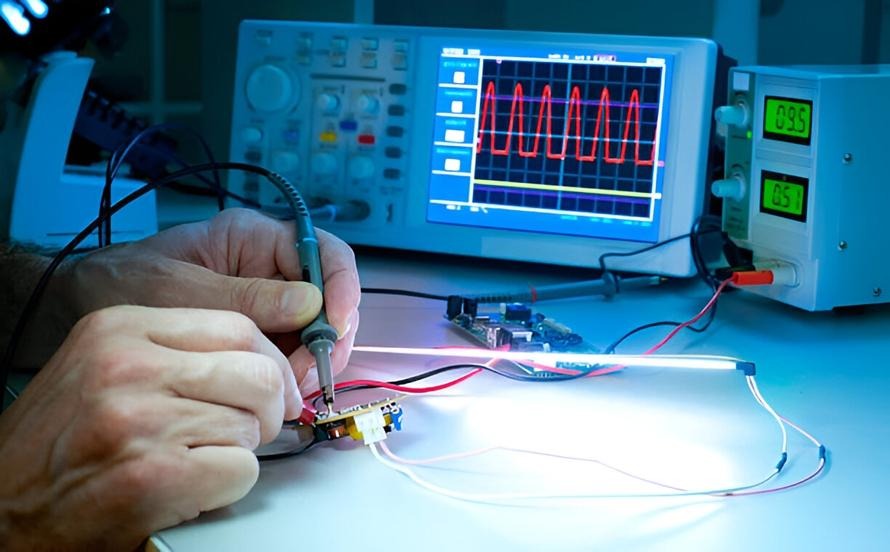
The electronics industry has become one of the fastest-growing sectors in the global economy, powering innovations across consumer technology, healthcare, automotive, telecommunications, industrial automation, and aerospace. Every smartphone, medical device, electric vehicle, smart appliance, and industrial control system begins as an idea before progressing through engineering, prototyping, manufacturing, testing, and final assembly. At the heart of this process is Electronics Manufacturing, which transforms product designs into reliable, high-quality electronic devices ready for the market.
Modern electronics manufacturing involves far more than assembling printed circuit boards. It includes component sourcing, PCB fabrication, surface mount technology (SMT), through-hole assembly, testing, quality assurance, system integration, and supply chain management. As products become smaller, faster, and more complex, manufacturers must adopt advanced technologies that improve production accuracy while reducing costs and time to market.
Equally important are Electronics Design Companies, which provide the engineering expertise required to develop efficient, manufacturable, and reliable electronic products. Their role extends beyond schematic creation to include PCB layout, hardware development, embedded system design, thermal analysis, and Design for Manufacturability (DFM). Close collaboration between design teams and manufacturing partners ensures that products move smoothly from concept to mass production.
This article explores the importance of electronics manufacturing, the role of electronics design companies, key manufacturing processes, industry applications, and the value of selecting experienced engineering and production partners.
What Is Electronics Manufacturing?
Electronics Manufacturing is the complete process of producing electronic products by transforming engineering designs into finished assemblies. The process begins with product development and PCB fabrication before moving through component assembly, testing, system integration, inspection, and final product verification.
Modern manufacturing facilities use highly automated production equipment to achieve consistent quality and high production efficiency. Surface mount technology allows miniature electronic components to be accurately positioned and soldered onto printed circuit boards, while automated inspection systems verify assembly quality throughout production.
Electronics manufacturing may include prototype development, low-volume production, and high-volume manufacturing depending on customer requirements. Many manufacturers also provide value-added services such as product testing, box-build assembly, cable assembly, firmware programming, and logistics support.
By integrating advanced manufacturing technologies with strict quality control, electronics manufacturers produce reliable products for a wide variety of industries.
Why Electronics Manufacturing Is Important
The quality of electronic products depends heavily on the manufacturing process. Even a well-designed circuit may experience performance issues if manufacturing tolerances are not properly controlled or if assembly defects occur.
High-quality Electronics Manufacturing ensures accurate component placement, reliable solder joints, consistent electrical performance, and long-term product durability. Automated production systems minimize human error while improving manufacturing efficiency and production consistency.
Modern manufacturing processes also support increasingly compact electronic products with complex multilayer PCBs, fine-pitch components, high-speed processors, and advanced communication interfaces. These capabilities allow manufacturers to produce innovative products while maintaining high quality standards.
As industries continue adopting automation, artificial intelligence, and connected devices, reliable electronics manufacturing has become essential for meeting growing market demands and maintaining product competitiveness.
The Role of Electronics Design Companies
Before manufacturing begins, electronic products must be carefully engineered to ensure functionality, reliability, and manufacturability. This is where experienced Electronics Design Companies play a vital role.
Design engineers develop electronic schematics, PCB layouts, embedded firmware, power management circuits, communication interfaces, and system architectures that meet both technical and commercial objectives. Throughout development, engineers perform simulation, signal integrity analysis, thermal evaluation, and component selection to optimize product performance.
Electronics design companies also conduct Design for Manufacturability and Design for Assembly reviews to identify potential production challenges before manufacturing begins. These engineering evaluations help reduce production defects, simplify assembly, and improve manufacturing efficiency.
By working closely with manufacturing teams during product development, design companies help ensure that products transition smoothly from prototype to full-scale production while maintaining high quality and cost efficiency.
The Electronics Manufacturing Process
The manufacturing process begins after the product design has been finalized and verified. Engineers prepare manufacturing documentation, component lists, PCB fabrication files, assembly instructions, and testing procedures before production starts.
PCB fabrication creates the printed circuit boards that serve as the electrical foundation of the product. Once the boards are completed, solder paste is applied using precision stencils before automated pick-and-place machines accurately position surface mount components.
The assembled boards pass through reflow soldering ovens where solder joints are formed under carefully controlled temperature profiles. Through-hole components, when required, are installed and soldered using selective soldering or wave soldering processes.
Following assembly, automated optical inspection, X-ray inspection, and electrical testing verify component placement, solder joint quality, and overall circuit functionality. Functional testing confirms that the finished product operates according to design specifications before final assembly and shipment.
Throughout the manufacturing process, quality management systems ensure consistent production and reliable product performance.
Benefits of Professional Electronics Manufacturing
One of the greatest advantages of professional Electronics Manufacturing is improved product quality. Automated production equipment delivers consistent assembly accuracy while reducing manufacturing defects and improving long-term reliability.
Efficient manufacturing processes also shorten production lead times, allowing companies to introduce new products more quickly and respond rapidly to changing market demands.
Professional manufacturers maintain advanced supply chain management systems that improve component availability, reduce procurement risks, and help control production costs.
Another significant benefit is manufacturing scalability. Companies can begin with prototype production before expanding to medium or high-volume manufacturing without major process changes.
Comprehensive quality assurance throughout production further improves customer confidence while reducing warranty claims and product failures in the field.
Applications of Electronics Manufacturing
Electronics manufacturing supports nearly every major technology industry. Consumer electronics companies depend on advanced manufacturing for smartphones, laptops, tablets, smart home devices, wearable technology, and entertainment systems.
Automotive manufacturers utilize sophisticated electronics manufacturing for engine control units, battery management systems, infotainment platforms, advanced driver assistance systems, electric vehicle electronics, and autonomous driving technologies.
Medical device manufacturers rely on high-quality production for patient monitoring systems, diagnostic imaging equipment, laboratory instruments, wearable healthcare devices, and portable medical electronics requiring exceptional reliability.
Industrial automation companies use electronics manufacturing for programmable logic controllers, robotics, factory automation equipment, motor drives, sensors, and intelligent monitoring systems.
Telecommunications infrastructure, aerospace electronics, defense systems, renewable energy equipment, networking hardware, Internet of Things devices, and scientific instrumentation all rely on precision electronics manufacturing to deliver dependable products.
Why Choosing Experienced Electronics Design Companies Matters
Successful electronic products begin with intelligent engineering decisions. Experienced Electronics Design Companies understand how design choices affect manufacturing efficiency, product reliability, thermal performance, regulatory compliance, and long-term operational stability.
Professional design teams use advanced electronic design software to optimize PCB layouts, signal integrity, electromagnetic compatibility, thermal management, and component placement before manufacturing begins.
Their engineering expertise helps reduce design revisions, improve product performance, and simplify production processes. Early collaboration between designers and manufacturers also minimizes costly manufacturing changes later in the product development cycle.
Many electronics design companies continue supporting customers throughout prototype validation, regulatory certification, production launch, and product lifecycle management, creating a seamless development process from concept to commercial production.
Working with experienced design professionals significantly improves the likelihood of developing successful electronic products.
Quality Assurance in Electronics Manufacturing
Quality assurance is essential because modern electronic products often operate in critical applications where reliability is paramount. Manufacturers inspect incoming materials before monitoring every stage of production using advanced inspection technologies.
Automated Optical Inspection detects assembly defects including missing components, incorrect polarity, solder bridges, and insufficient solder joints. X-ray inspection evaluates hidden solder connections beneath complex integrated circuits such as Ball Grid Arrays.
Electrical testing verifies circuit continuity and insulation resistance, while functional testing confirms overall product performance. Environmental reliability evaluations may include thermal cycling, vibration testing, humidity testing, burn-in testing, and mechanical stress analysis depending on the application’s requirements.
Leading manufacturers and engineering firms maintain internationally recognized certifications such as ISO 9001, IPC standards, ISO 13485 for medical devices, IATF 16949 for automotive electronics, AS9100 for aerospace applications, and RoHS compliance to ensure products consistently meet global quality standards.
Conclusion
Electronics Manufacturing forms the backbone of today’s technology industry, transforming innovative ideas into reliable products used across consumer electronics, automotive systems, industrial automation, telecommunications, healthcare, aerospace, and renewable energy. Precision manufacturing processes, advanced automation, and comprehensive quality assurance enable companies to produce sophisticated electronic systems with exceptional reliability.
At the same time, experienced Electronics Design Companies provide the engineering expertise necessary to develop products that are both technically advanced and ready for efficient manufacturing. Their ability to optimize product design, improve manufacturability, and support long-term reliability makes them an essential partner throughout the product development process.
As electronic technologies continue to evolve, the collaboration between professional electronics manufacturing providers and skilled electronics design companies will remain a key driver of innovation, quality, and commercial success in the global electronics industry.

